For autistic adults
Increased confidence and independence — smoother, less anxious travel, and a sense of ownership from being part of the design process itself.
Re-Imagining Interdependent Travel experiences for Autistic Adults. This study aims to understand autistic adults in an ableist society and identifying opportunities to enhance travel.
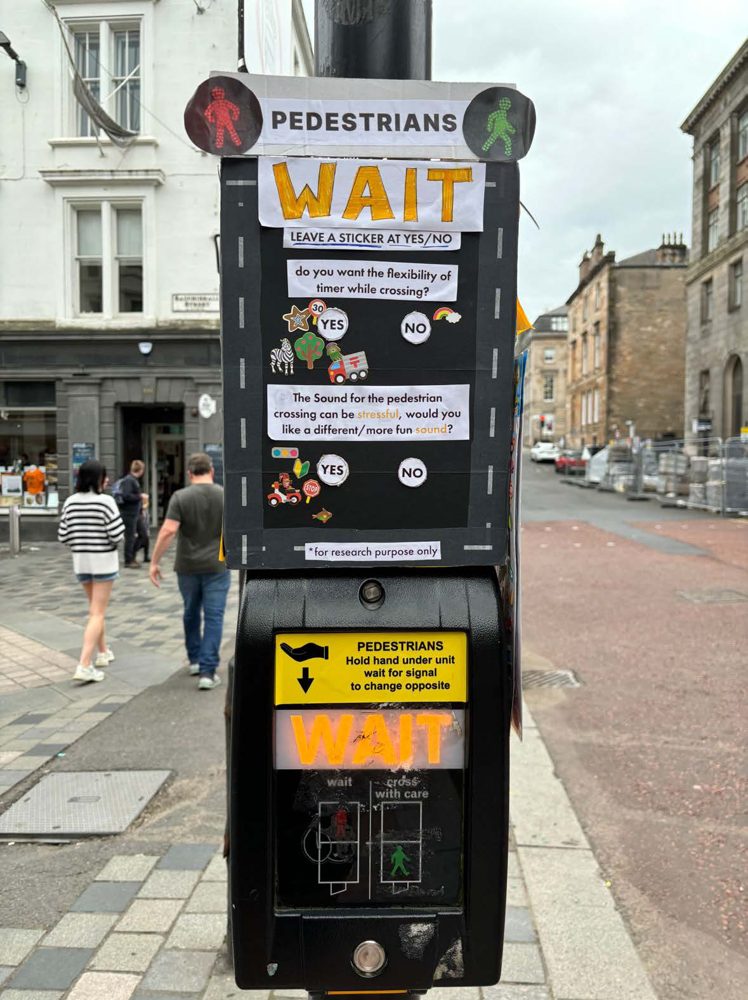
FIG. W1 WORKSHOP IMAGES Aarti Vijay, 2024
Seeing Autism in my family and the constant uncertainity of what the future might look like for my family member because of the lack of services. The global shortcomings in autism care and the widespread lack of awareness have made me realize the importance of addressing these issues from a social lens, rather than just a medical one. from a social lens, rather than just a medical one
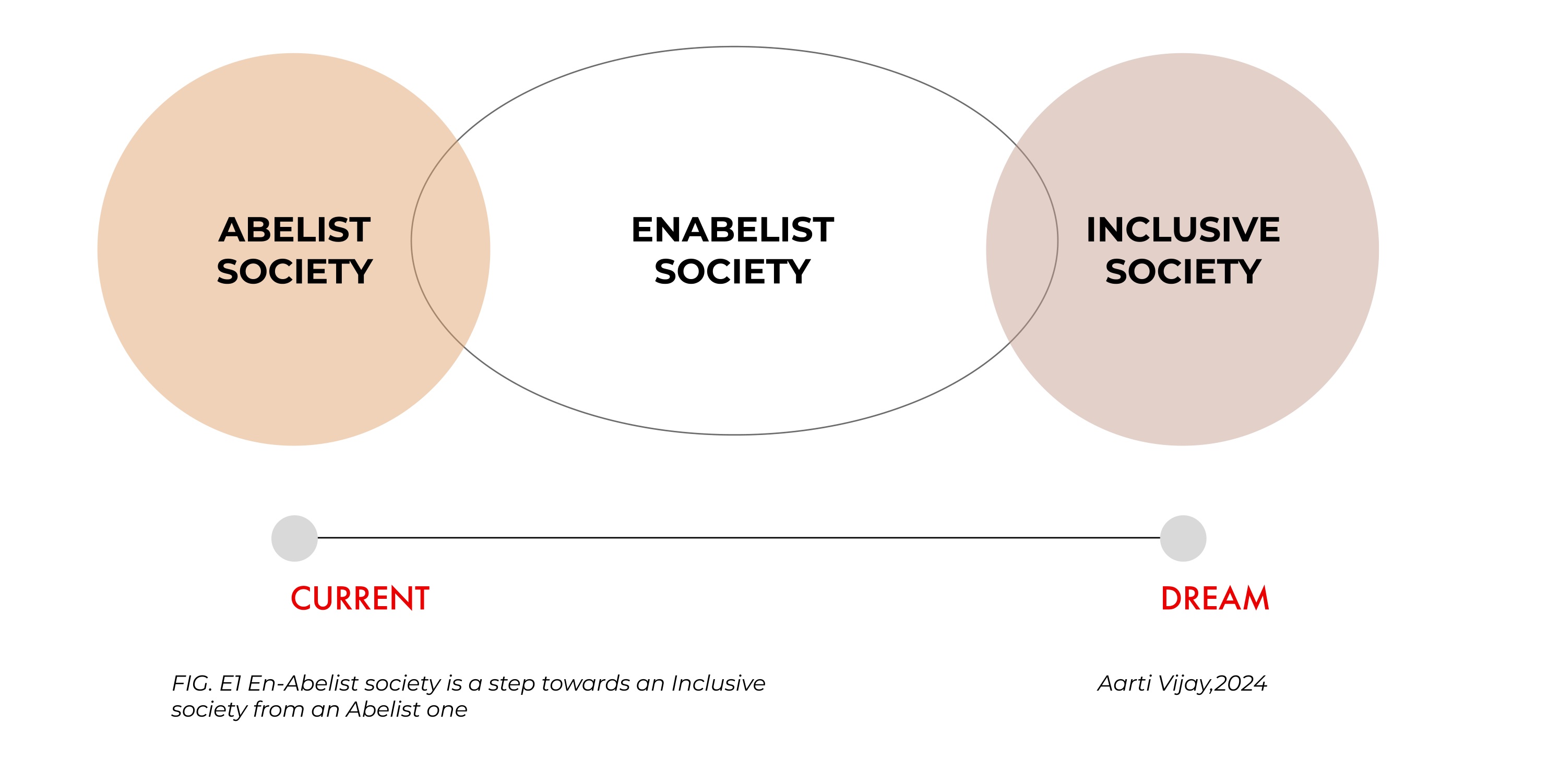
By examining how societal structures and attitudes disable and marginalize certain groups, this study celebrates neurodiversity, envisions creating environments that are cognitively inclusive, and proposes the theory of En-Abelism, exploring its potential to reshape our built environment.
I had to confront my biases about neurodiversity. As a neurotypical individual, I couldn't fully grasp the struggles faced by autistic people. This meant striving to understand their experiences from the inside.
| Research | Secondary research through PEST analysis, stakeholder maps, case studies, books on Autism and Ted Talks; primary research through structured interviews with Neighbourhood Networks Govan, ARC Scotland, and members of Neighbourhood Networks, Clydebank |
| Facilitation | An engagement session building a journey map with gatekeepers and members, and two generative co-design sessions with 12 co-designers, with stop cards, break cards and redesigned accessible consent forms |
| Proposition | The BeeHuman Initiative, the Universal Express and its DreamCarriage, six Design for Affordance touchpoints, and the proposed theory of En-Abelism |
| Presentation | Service overview and story board, service blueprint, system map, journey map and the Degree show on 29.08.2024 |
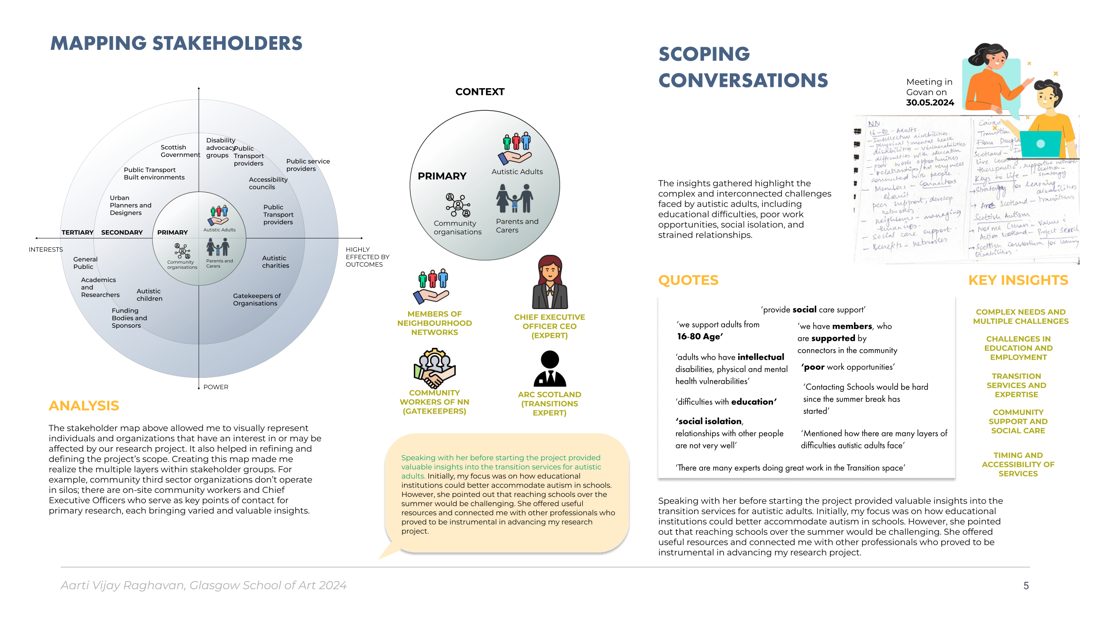
I chose to analyse my secondary research through PEST analysis, Case studies, Books on Autism. I used service design tools as engagement tools like Journey mapping. I also chose Co-design workshops for more indepth insights.
PEST ANALYSIS, STAKEHOLDER MAPS, CASE STUDIES, BOOKS. Studying existing case studies was crucial in understanding efforts to support autistic adults. This exploration also highlighted the limitations and gaps.
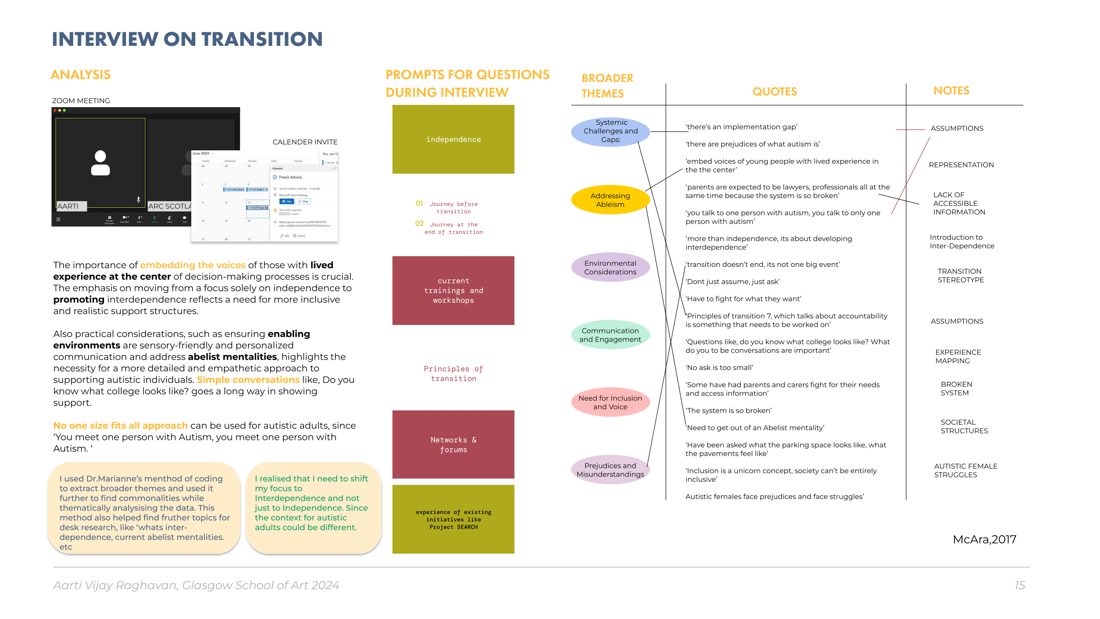
Interview with Neighbourhood Networks Govan branch, ARC Scotland, and gatekeepers and members of Neighbourhood Networks, Clydebank. I used Dr.Marianne's menthod of coding to extract broader themes.
I conducted this workshop to explore what the public transport system could look like if autistic adults were CO-DESIGNERS. It also sought to envision a built environment that is truly inclusive, `Designed for the Mind'.
How might we design an autism-led service at a community level that enhances support systems of Independence & Interdependence for autistic adults?
The design of travel stations can impact confidence, Independence and quality of life for Autistic adults. With the accumulated insights there were common themes emerging: Building Confidence & Reliability, Flexibility, Environmental Modifications and Empathy.
Focuses on creating environments where users can trust that their needs will be consistently met. Reduces anxiety by providing dependable and predictable experiences.
Emphasizes the ability to adapt services and environments to accommodate diverse and changing individual needs. Ensures that systems are not one-size-fits-all but can be personalized.
Involves altering physical spaces and sensory environments to support individuals with varying needs. Aims to remove barriers, creating spaces that are more comfortable and usable for everyone.
I conducted this workshop to explore what the public transport system could look like if autistic adults were CO-DESIGNERS. The workshop aimed to highlight collaborative design, ensuring their voices are embedded in decision-making processes.
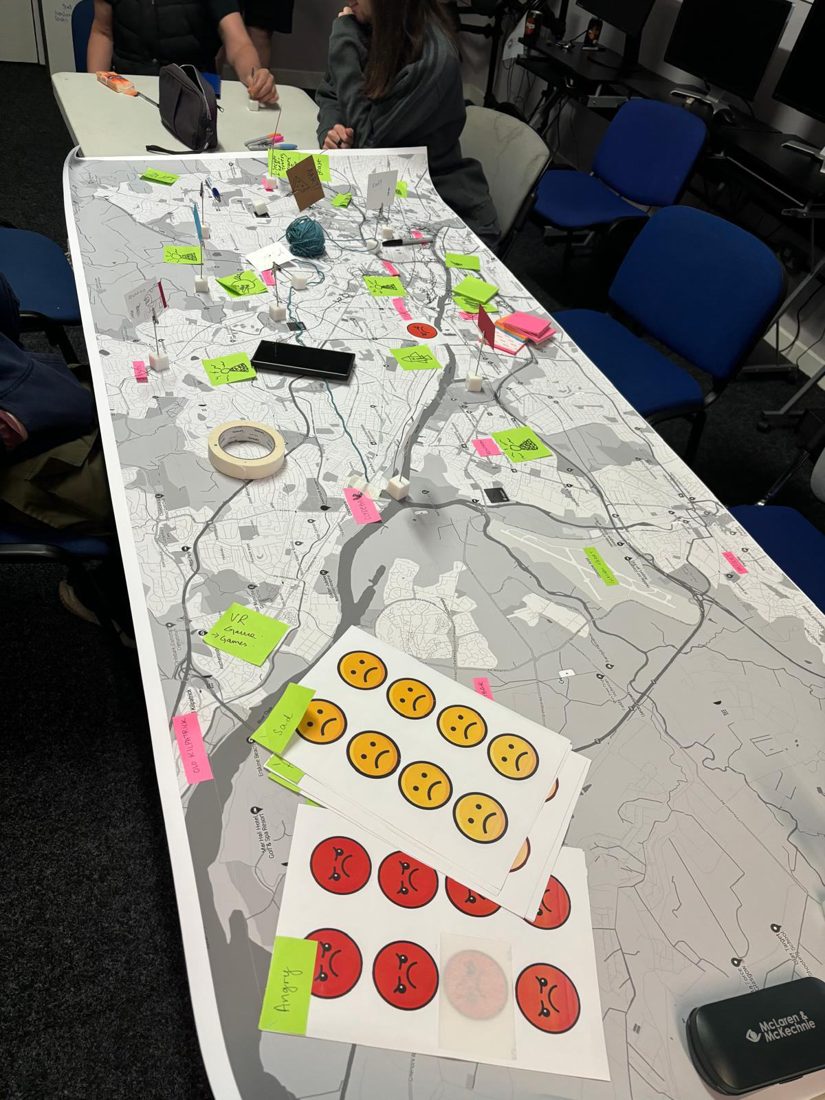
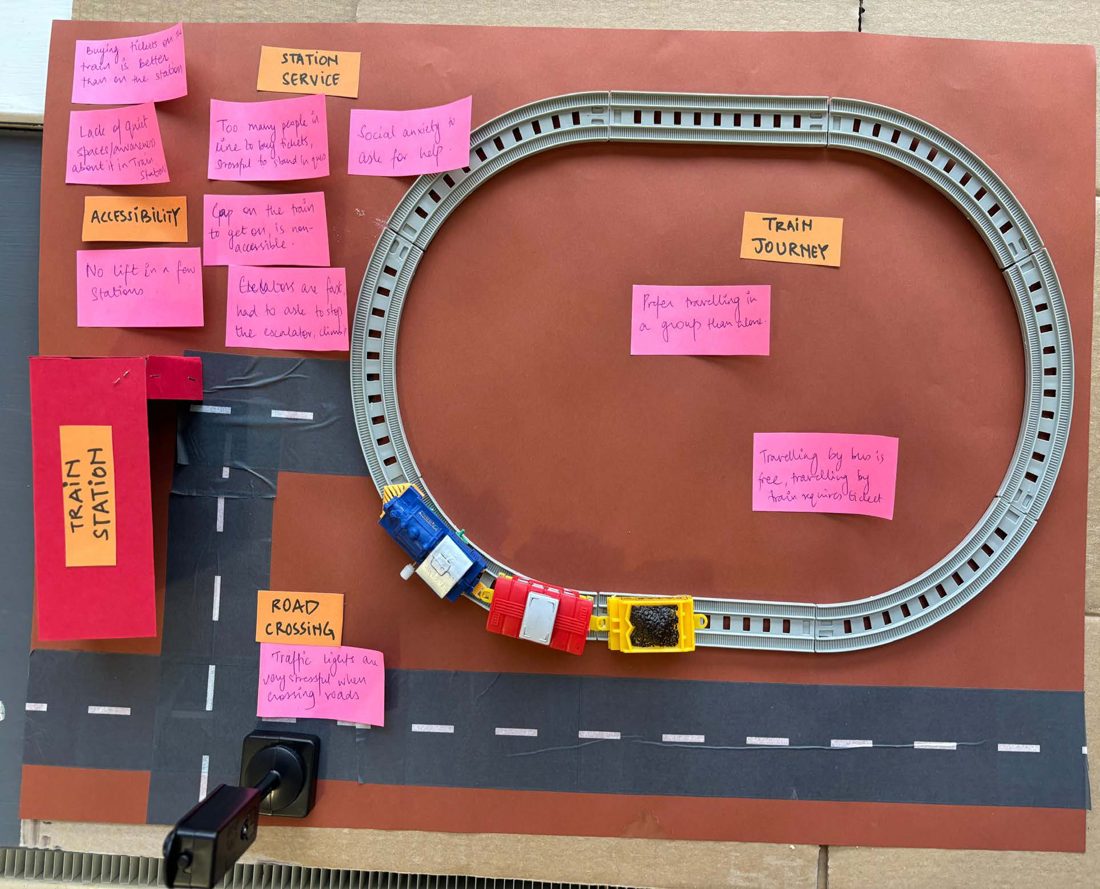
workshop 1 -- discover -- 23.07.2024 Mapping with thread and pins on Glasgow Map with a prompt, How did everyone get here today? A participant took over the workshop and started planning a heist, and I had to improvise and create scenarios related to Public transport. workshop 2 -- co-design & FEEDBACK -- 08.08.2024 I aimed to reflect on the insights from the previous workshop and use my engagement tool to facilitate discussions. I wanted to present my initial prototypes and gather feedback to refine them.
According to the neuro-diversity model, Autism is not a disorder but rather a mismatch between the autistic brain and the neurotypical built environment. En-Abelism is a proactive approach to creating environments and systems that actively enable and empower individuals with disabilities, fostering inclusion and support. The interventions that I envision are more enabling more smooth interactions with the environment which would require some adaptations from both sides.
As one of the interviewee mentioned, Inclusion is a unicorn concept, and society can't be entirely inclusive . It made me think of how En-Abelism could be a step towards it.
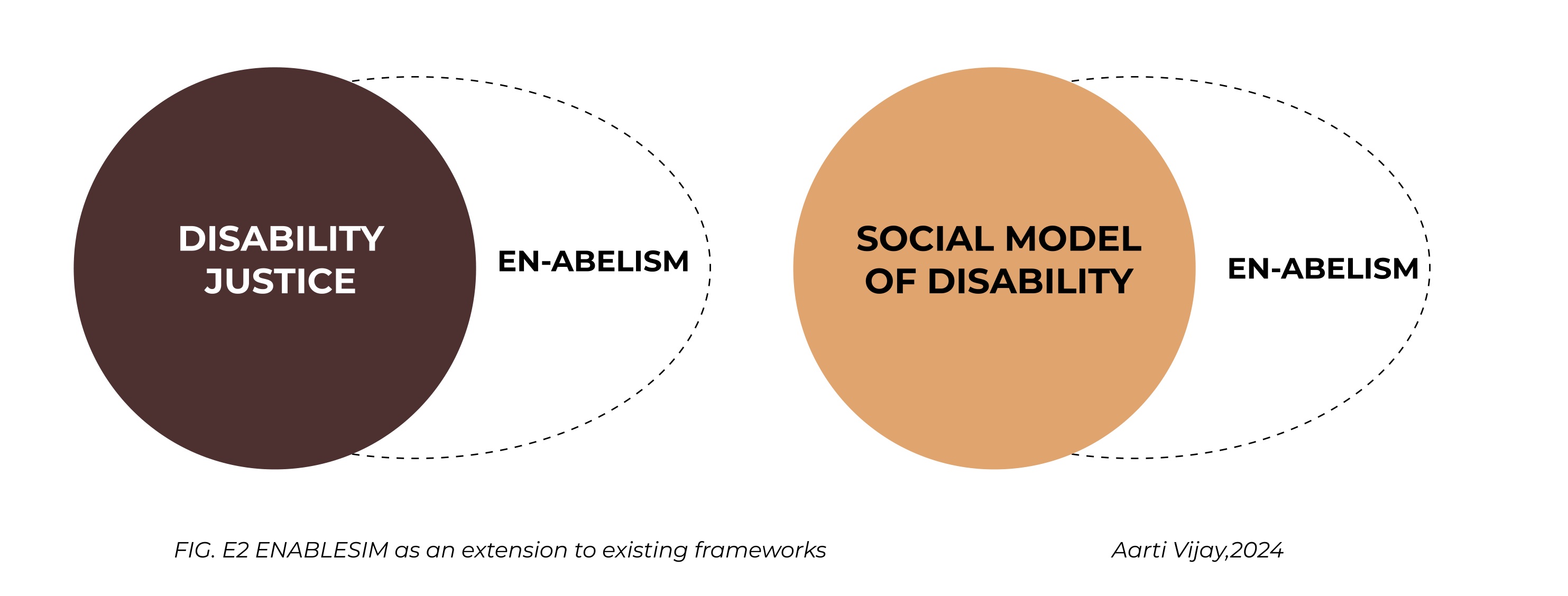
But I envision this Theory of En-Abelism as an extension to existing frameworks like Disability Justice, Social Model of Disability, Universal Design. En-abelism could talk about not just removing barriers but actively creating conditions to thrive.
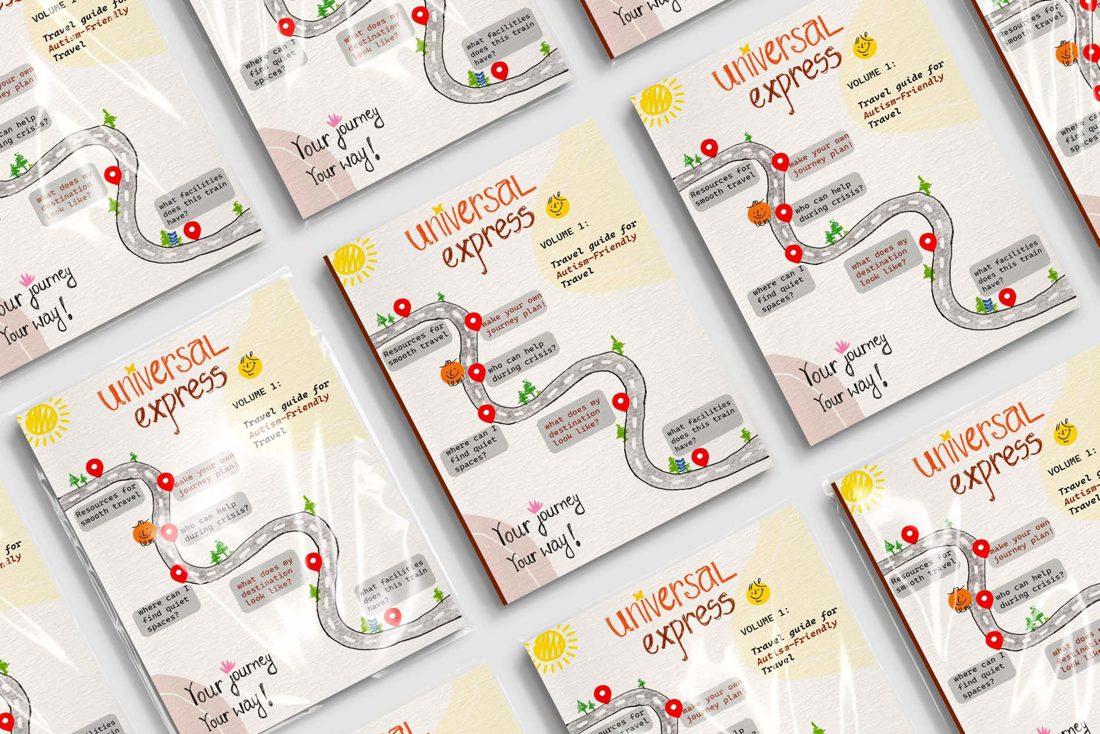
Universal Express carries the DreamCarriage, a visionary concept for public transport, designed in collaboration with autistic adults to reflect what public services could achieve when their needs are prioritized and they are actively involved in the design process. This carriage embodies the principles of designing for the mind, creating an inclusive space where every passenger is respected and can travel with dignity and comfort.
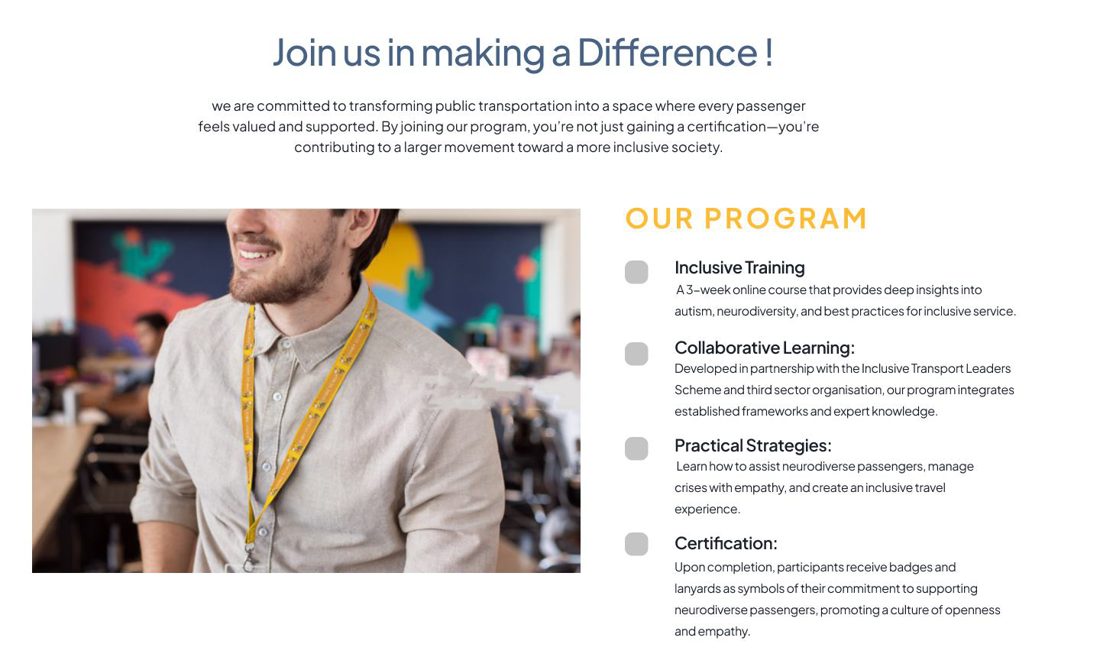
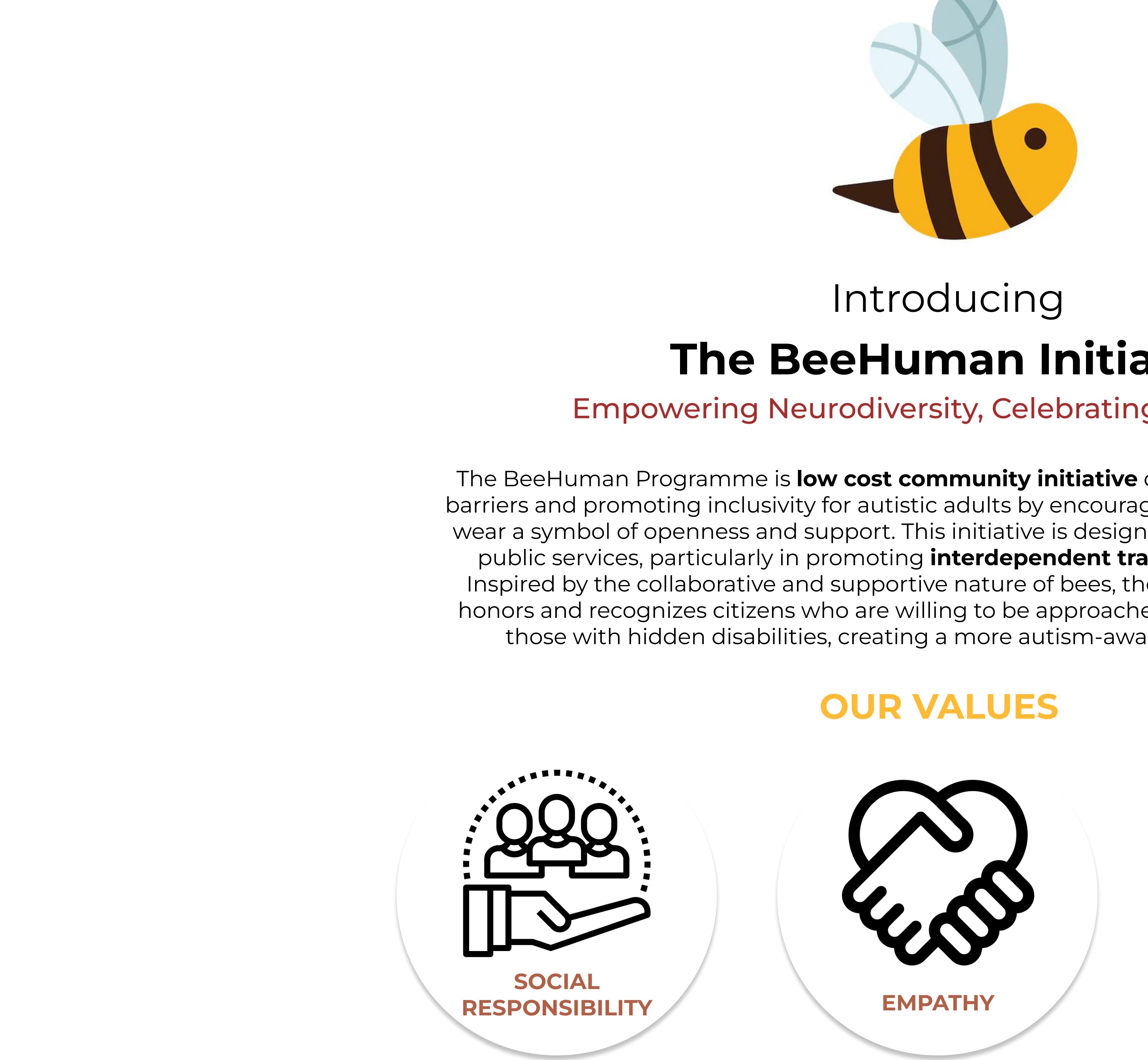
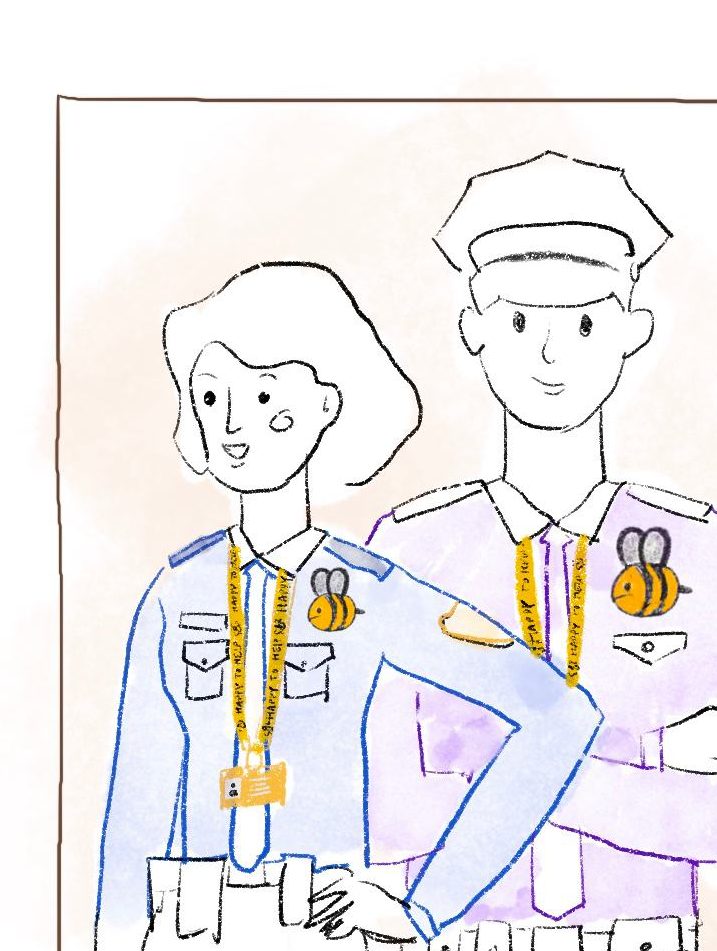
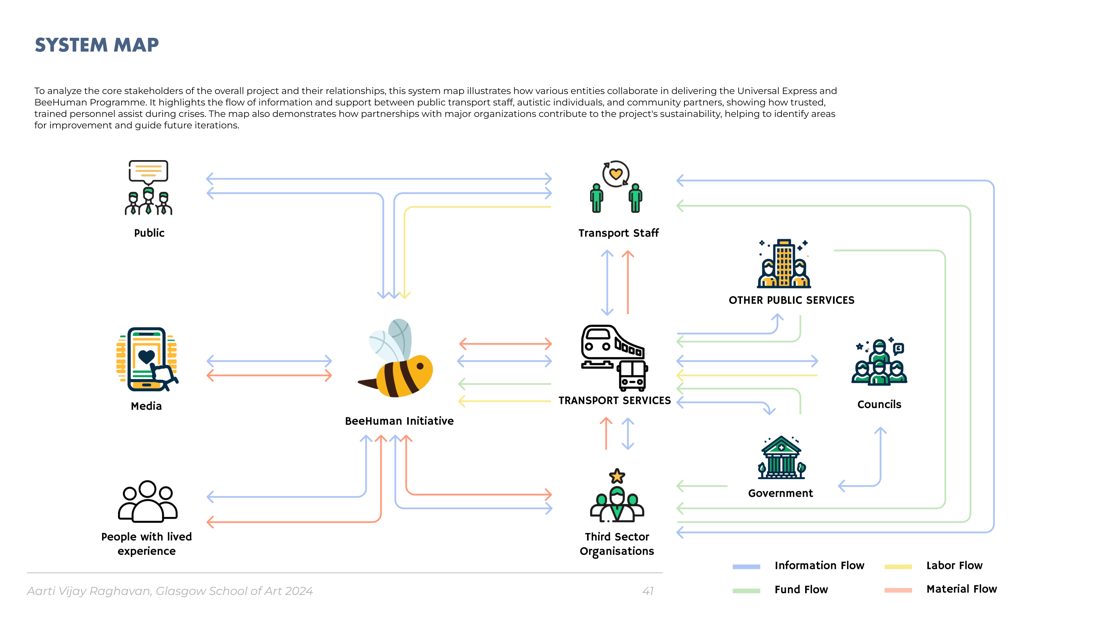
The BeeHuman Initiative is low cost community initiative dedicated to breaking social barriers and promoting inclusivity for autistic adults by encouraging community members to wear a symbol of openness and support. Inspired by the collaborative and supportive nature of bees, it honors and recognizes citizens who are willing to be approached and provide assistance to those with hidden disabilities, creating a more autism-aware and inclusive society. Empowering Neurodiversity, Celebrating Differences.
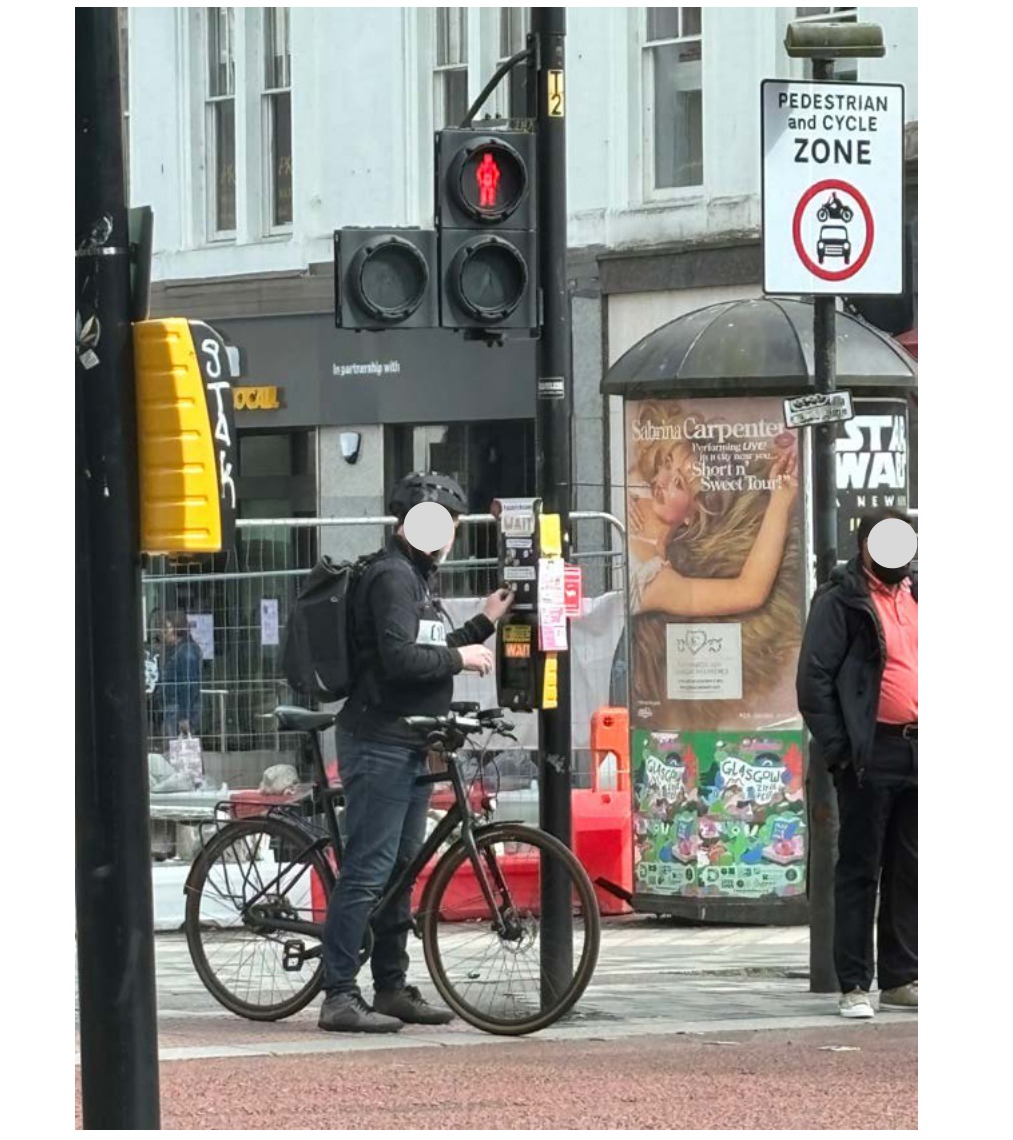
For autistic adults
Increased confidence and independence — smoother, less anxious travel, and a sense of ownership from being part of the design process itself.
For public transport
Autism-friendly design, stronger staff training, and a system that reads as progressive, inclusive and trustworthy.
Critical analysis — Universal Express
A futuristic concept needing significant governmental approval and investment — funding is the central challenge.
Critical analysis — BeeHuman
Low-cost and collaborative, but success depends on individual mindset and willingness to engage.
Co-created with participants through BeeHuman and the Universal Express, using collaborative design to create spaces for dialogue and empowerment.
Presented to Glasgow City Council's Transport Strategy Team, connecting Neighbourhood Networks with GALLANT to support more inclusive public transport.

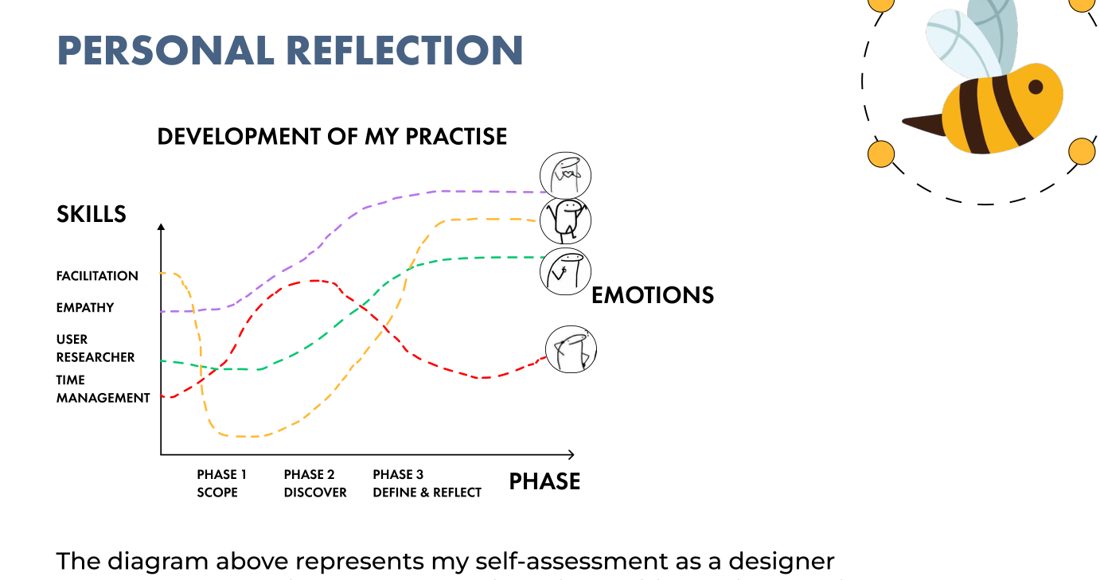
BeeHuman and the Universal Express are a product of the co-designers/partipants of the workshop. It makes me envision how much better public services could become if we valued people's lived experiences and made the world a little more neuro-spicy.
Dom pointed out that my approach was traditional, stressing the need to involve participants in the design from the very beginning. One area I need to improve is time management. In the future, I want to narrow my focus earlier by consulting with experts.
 Research & StrategyPure GermanyRebuilding a travel agency's website, tools and comms as one connected service.Brand & Visual StorytellingVisual StorytellingLogo, packaging and visual identity work across Pepper & Kaapi Co. and Ekorro.
 PlaygroundMiscellaneous WorkSummer school, vibe-coded tools, art therapy and a self-initiated donation drive.