Making the invisible visible
A service intervention for Scotland's third sector — advocating for accessibility, reasonable adjustments and the representation of marginalised groups in leadership.

A brief about unmet needs in the third sector
This collaborative project was undertaken in partnership with the Voluntary Sector in Scotland — specifically GCVS and THRE. Our brief was to investigate the unmet needs around human rights and equality for people working in the third sector.
Through interviews with voluntary organisations and stakeholders we identified the challenges they face, then designed an intervention to advocate for the representation of marginalised groups — making the voluntary sector more disability-friendly and promoting reasonable adjustments in the workplace.
What I owned
Guide
I found myself in the role of the Guide, directing the project at times. This allowed me to refine my leadership skills as I navigated challenges and kept the group moving forward.
Collaborator
As the Collaborator, I communicated ideas, information and feedback to fellow group members — working to harmonise everyone's perspectives despite language barriers.
Strategist
I developed and executed strategies for achieving our project goals, leaning on each group member's individual strengths.
Research, then synthesis
We spoke to volunteers, staff and stakeholders across a range of voluntary organisations, then worked the material down into a single, sharper design challenge.
Research methodology
I led the research, which highlighted a lack of inclusion and diversity in leadership roles across the third sector — alongside a shortage of reasonable adjustments and limited awareness of the social model of disability.
Analysis & synthesis
During the analysis phase I synthesised the data using a range of methods to identify opportunities for design intervention. Collaborating with my team, we developed a service blueprint, which proved instrumental in refining both the challenge and our proposed solution.
Who we spoke to
Primary and secondary research, initial scoping with thematic clustering, and a purpose-built engagement tool used in interviews.
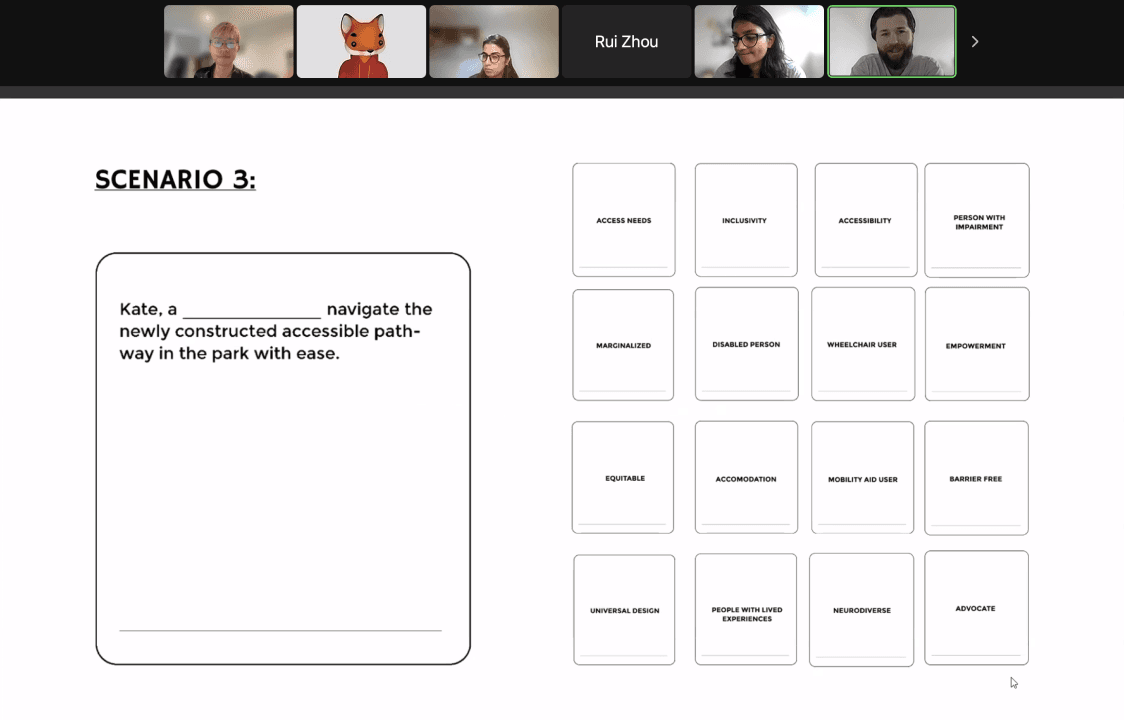
The engagement tool
The purpose of the engagement tool was to strike up conversations on a range of topics and interact with volunteers — to understand the challenges in the third sector, and to give volunteers the flexibility to highlight any unmet service needs.
What we found
People with disabilities are often typecast into roles according to their disabilities, and stigma around disability affects both employment and disclosure.
Many disabled CEOs hide their impairments to avoid being judged. A lack of reasonable adjustments in the workplace hinders employability. And language came up as a touchpoint time and again throughout our research.
Research highlighted a clear lack of inclusion and diversity in leadership roles across the third sector.
Workplaces frequently lack the adjustments that would make employment genuinely accessible, which limits who can take part.
There was limited awareness of the social model of disability, and of the inclusive frameworks built on top of it.
Stigma means many people — including senior leaders — choose to hide impairments rather than risk being judged for them.
The words used around disability came up repeatedly as something that shapes whether people feel included or excluded.
Research question
How can voluntary organisations, in collaboration with THRE, effectively advocate for and implement accessibility and inclusive training programmes within the third sector — using the social model of disability and other inclusive frameworks — to empower marginalised groups and advocate for more representation in leadership roles?
Introducing BlendBridge
Our service intervention: an initiative to advocate for an inclusive future, connecting marginalised communities with vital resources, opportunities and voices. We do this in two ways.
Workshops for inclusion
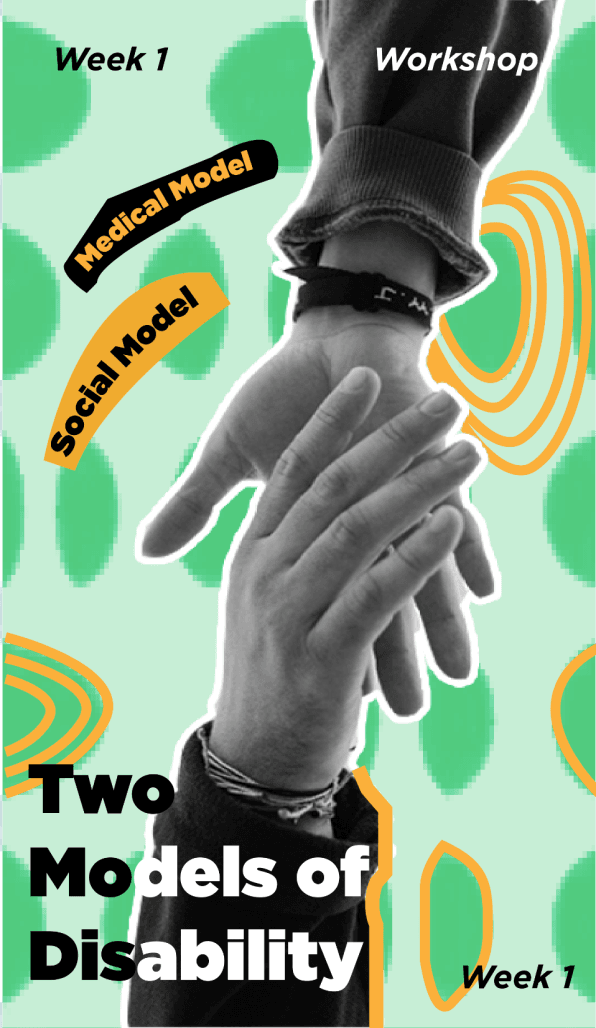
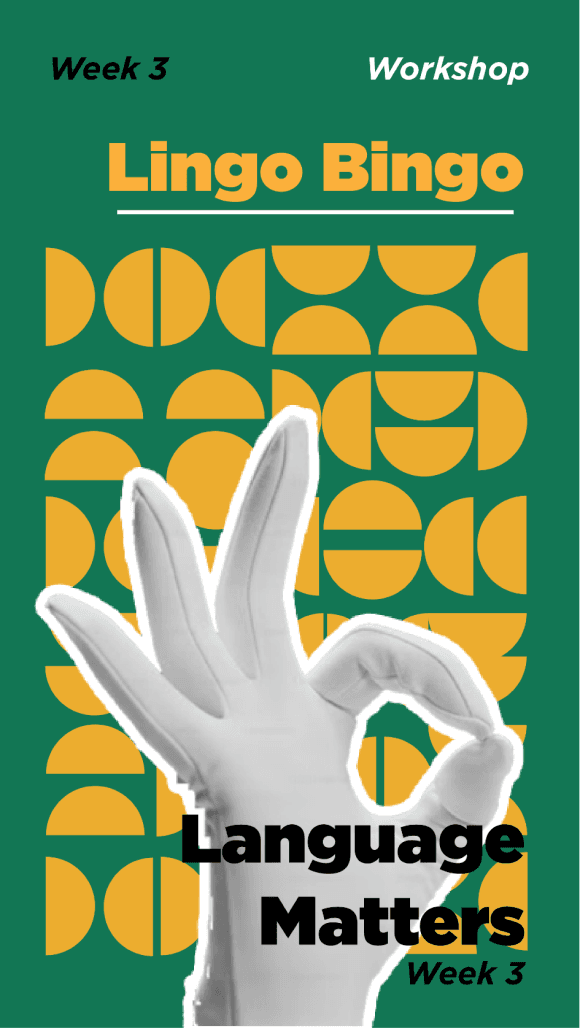
BlendBridge offers a four-week on-site workshop grounded in the social model of disability for ten participants, focusing on awareness, skill-building and myth-busting. Led by two THRE facilitators, participants engage in a two-hour crash course each week, record their journey in journals, and receive certification — enhancing employability and enabling them to train others.
A buddy system for collaboration
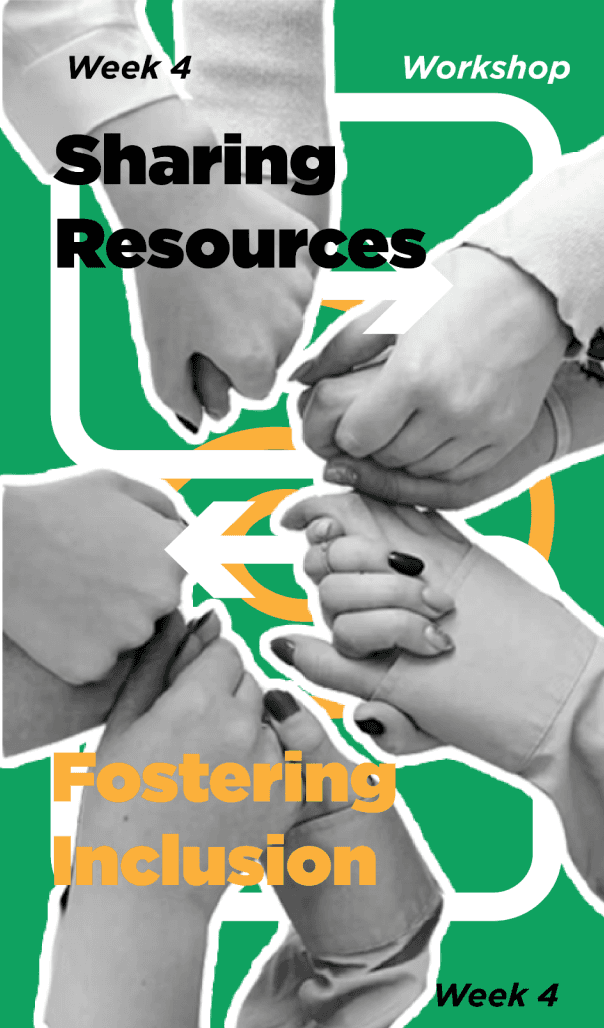
BlendBridge's buddy system connects non-profits, corporations and organisations so they can share resources, foster collaboration and build capacity together rather than in isolation.
Four weeks, four themes
Each session is a two-hour crash course. Participants document their experience in a journal and leave with a piece of the week — a collage, a reflection, a bracelet bead.

The Inclusion Gazette
A journal given out at the beginning of the workshop for participants to document their experience. It carries the workshop agenda, the available resources, and information about reasonable workplace adjustments.


A collaborative forum for resource sharing
Accessible through the THRE website, users can book consultations, search for relevant resources and use the information provided. A dedicated app extends that access further, giving voluntary organisations a convenient forum to seek help and promote collaboration.
- See resources from every organisation in one place, with accessible knowledge and tools.
- Easy access to courses, workshops and other training.
- Earn badges for the courses you complete.
- Ask questions and share ideas on open forums.
- Book a private consultation for anything more specific.
- A platform for job searching within the third sector.
- Recommended topics, news and ongoing CSR initiative case studies.
- Connect organisation to organisation, and people to each other.
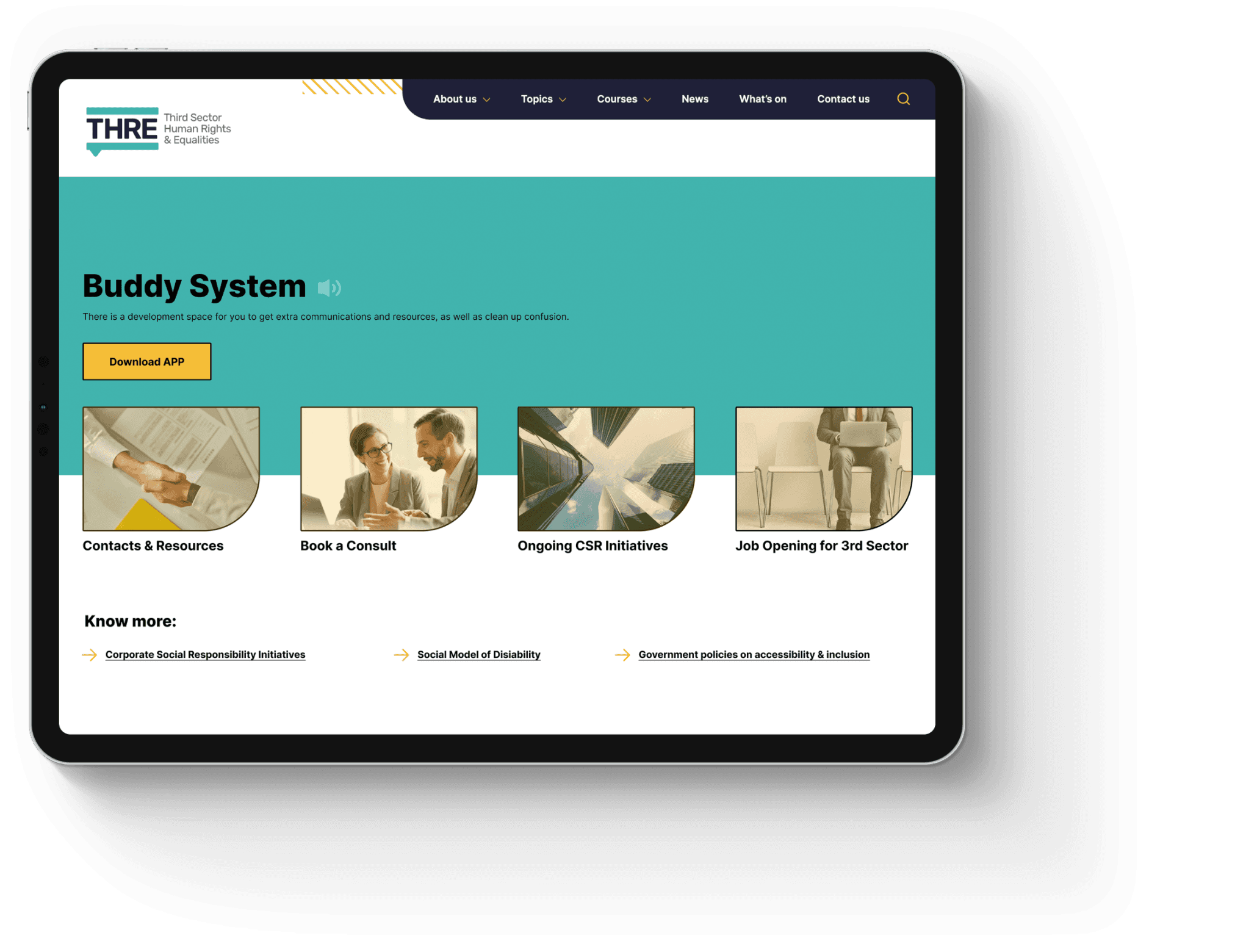
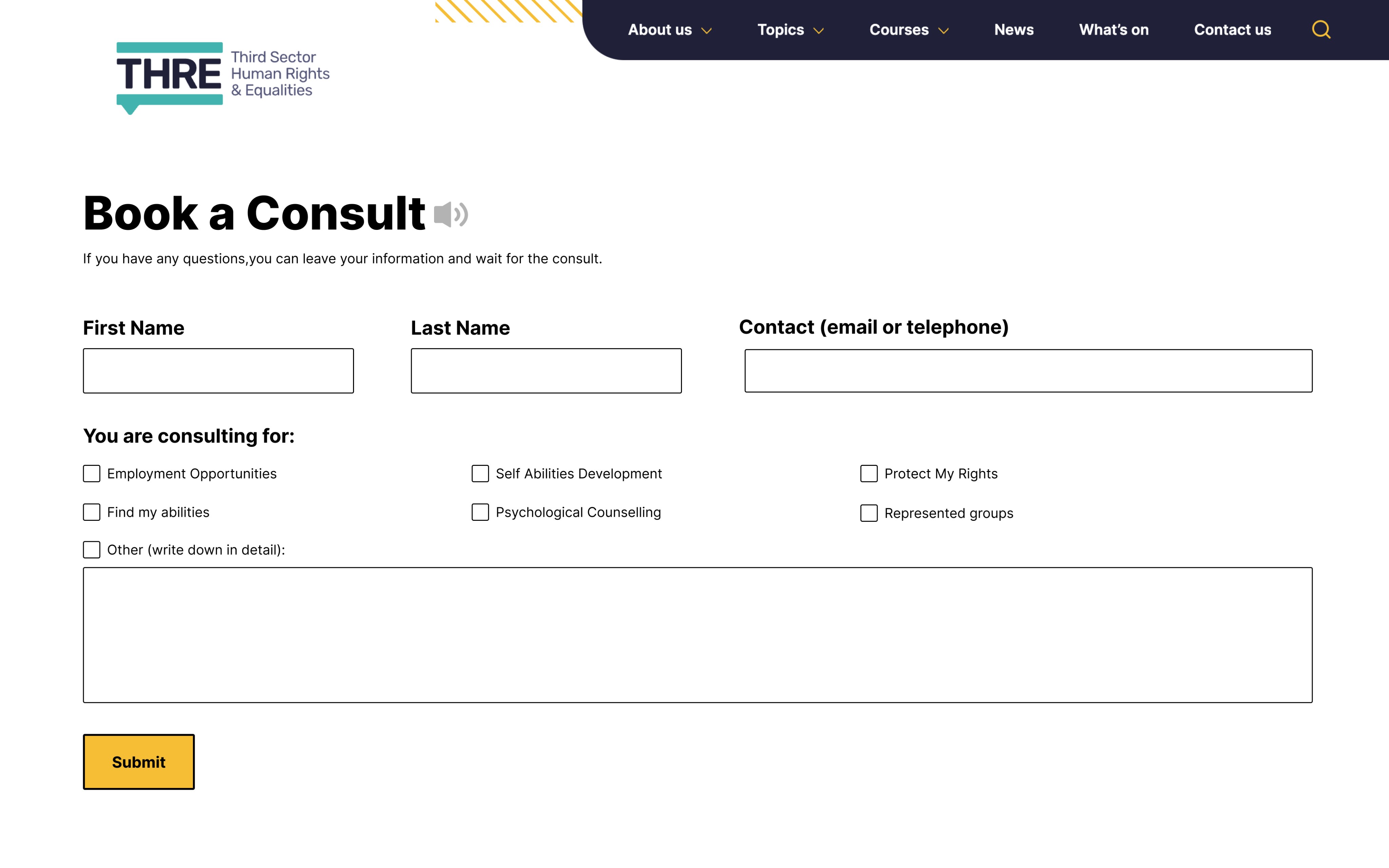
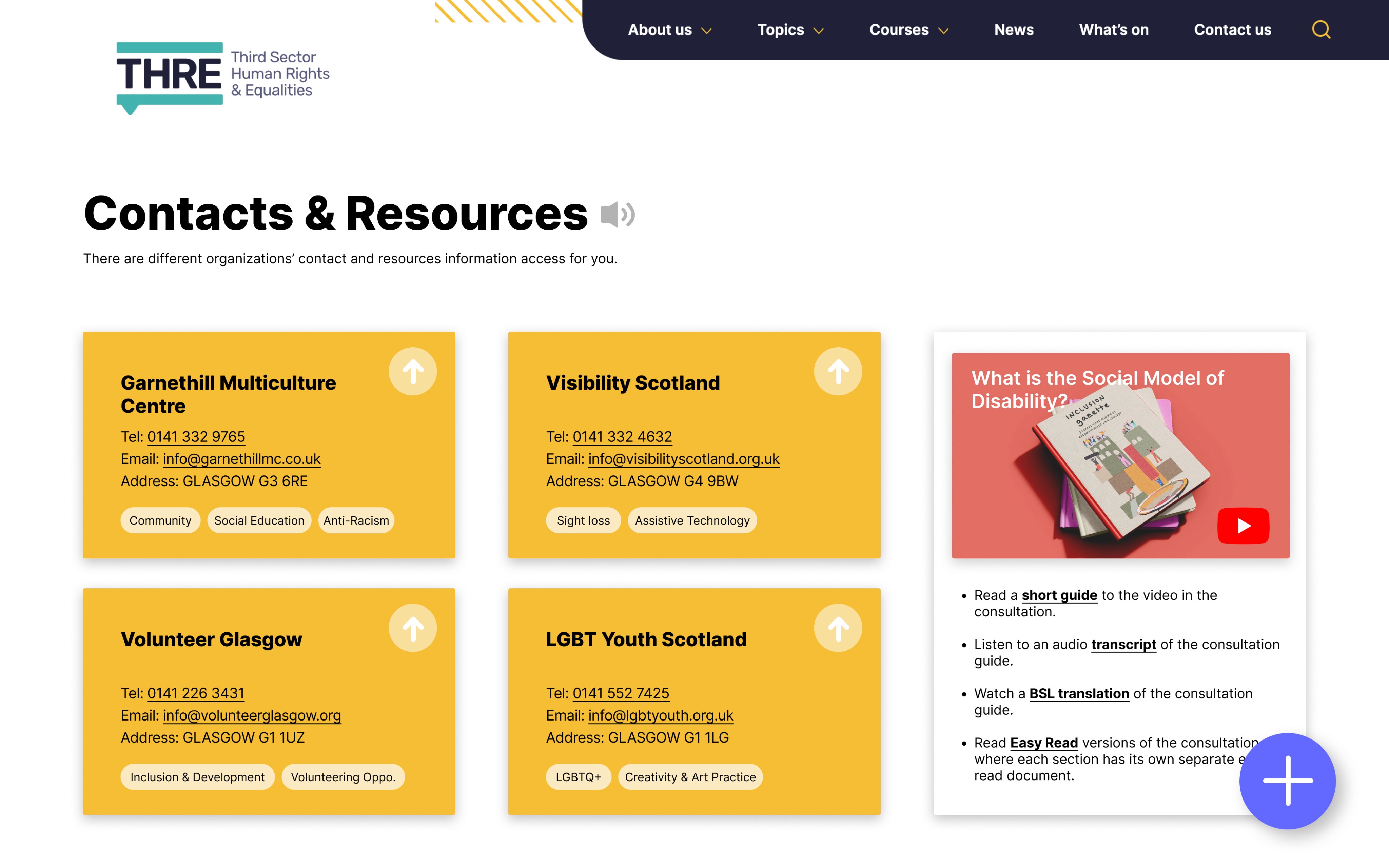


Walkthrough of the service and its touchpoints
Where it landed
The intervention creates a safe space for people to share lived experiences, opens doors for representation from other marginalised groups, and combines organisational resources for capacity building — acting as a catalyst for broader inclusion efforts.
After we presented the work, GCVS and THRE were interested in incorporating these interventions into their own programmes. They were also keen to use the insights gathered during our primary research phase to improve their existing services.
Testing with Visibility Scotland
We tested the service and its touchpoints with staff from Visibility Scotland, walking through scenarios together and watching where the design held up and where it didn't.
- Accessibility and inclusivity have to be designed into the web and app experience from the start — not added afterwards.
- Forums give charities and individuals the confidence to ask for help more easily.
- People enjoy reading each other's journal responses as a way of understanding different viewpoints.
Key learnings
Talking to different stakeholders and spending time inside voluntary organisations was genuinely inspiring — it showed how much passion there is for contributing to society.
Challenges
Most volunteers and staff we spoke to initially seemed happy with their experience in the third sector, which made it hard to find gaps worth designing for. Speaking to more people, and having deeper conversations, was what eventually opened the project up.
Check out other projects
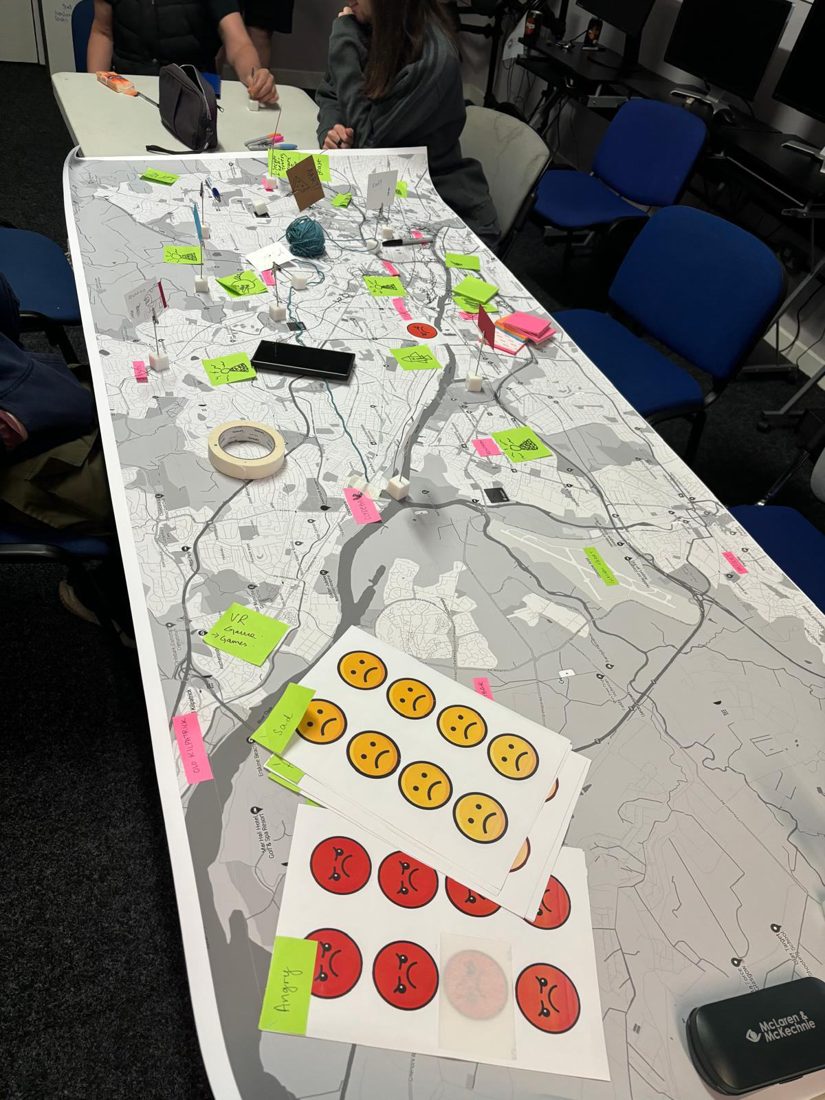 Social Innovation & Service DesignReimagining Travel for Autistic AdultsCo-design workshops proposing inclusive public transport, pitched to Glasgow City Council.
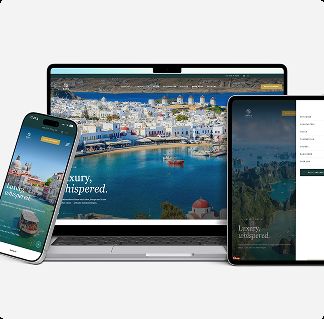 Research & StrategyPure GermanyRebuilding a travel agency's website, tools and comms as one connected service.
 MiscellaneousPlaygroundArtworks, a summer school, vibe-coded tools and a neighbourhood donation drive.